Claude Code Proxy
2026
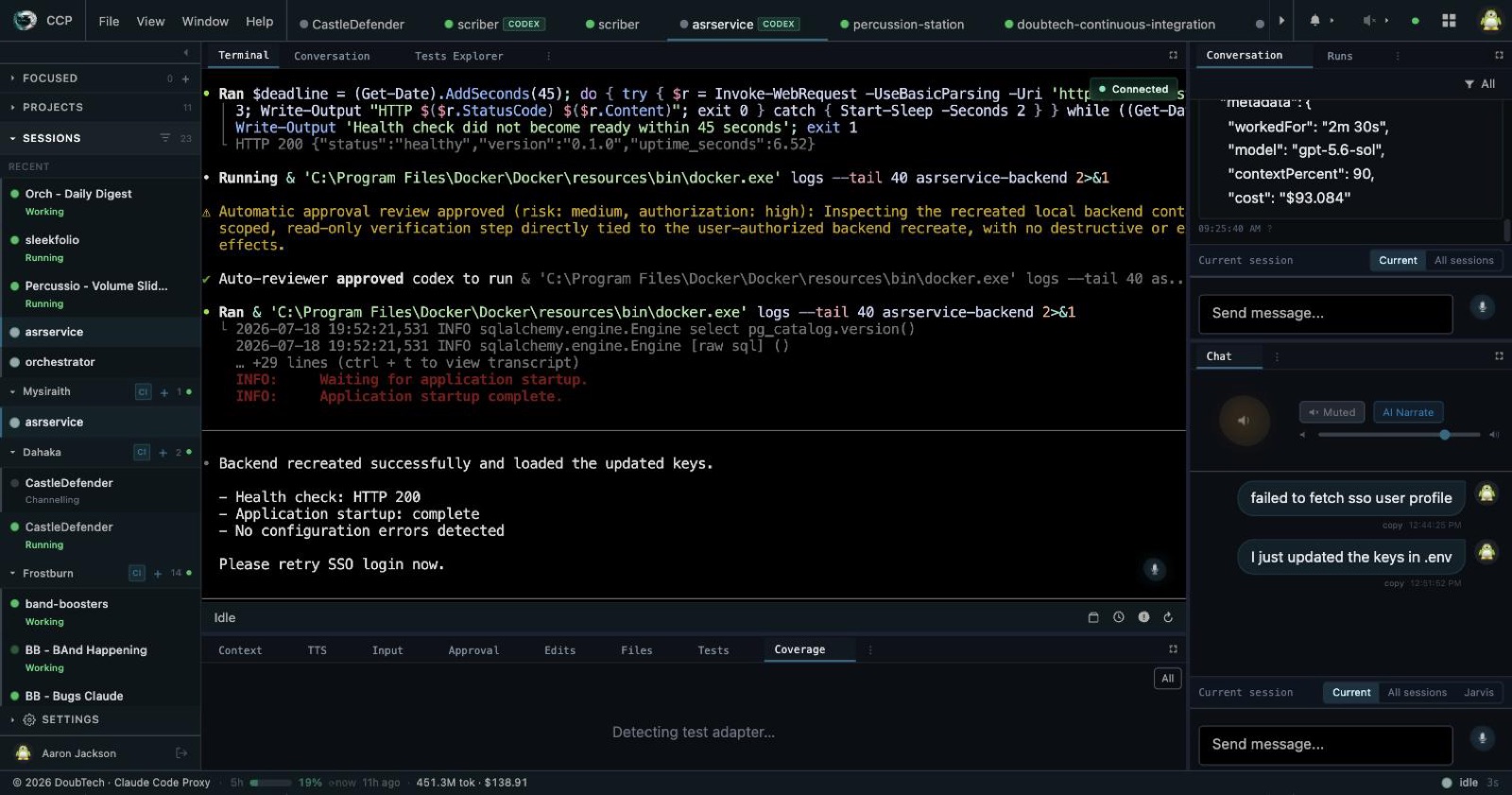
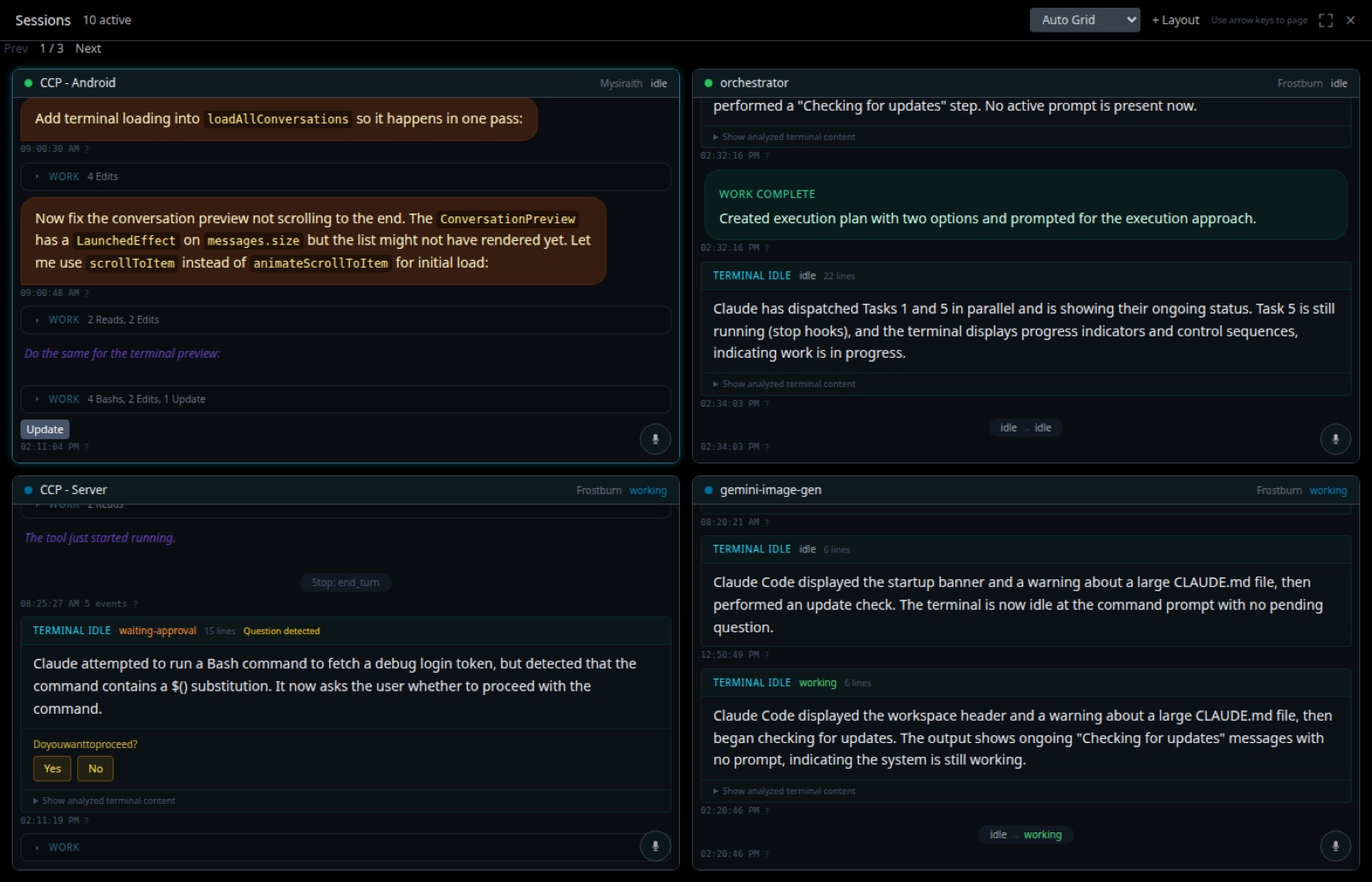
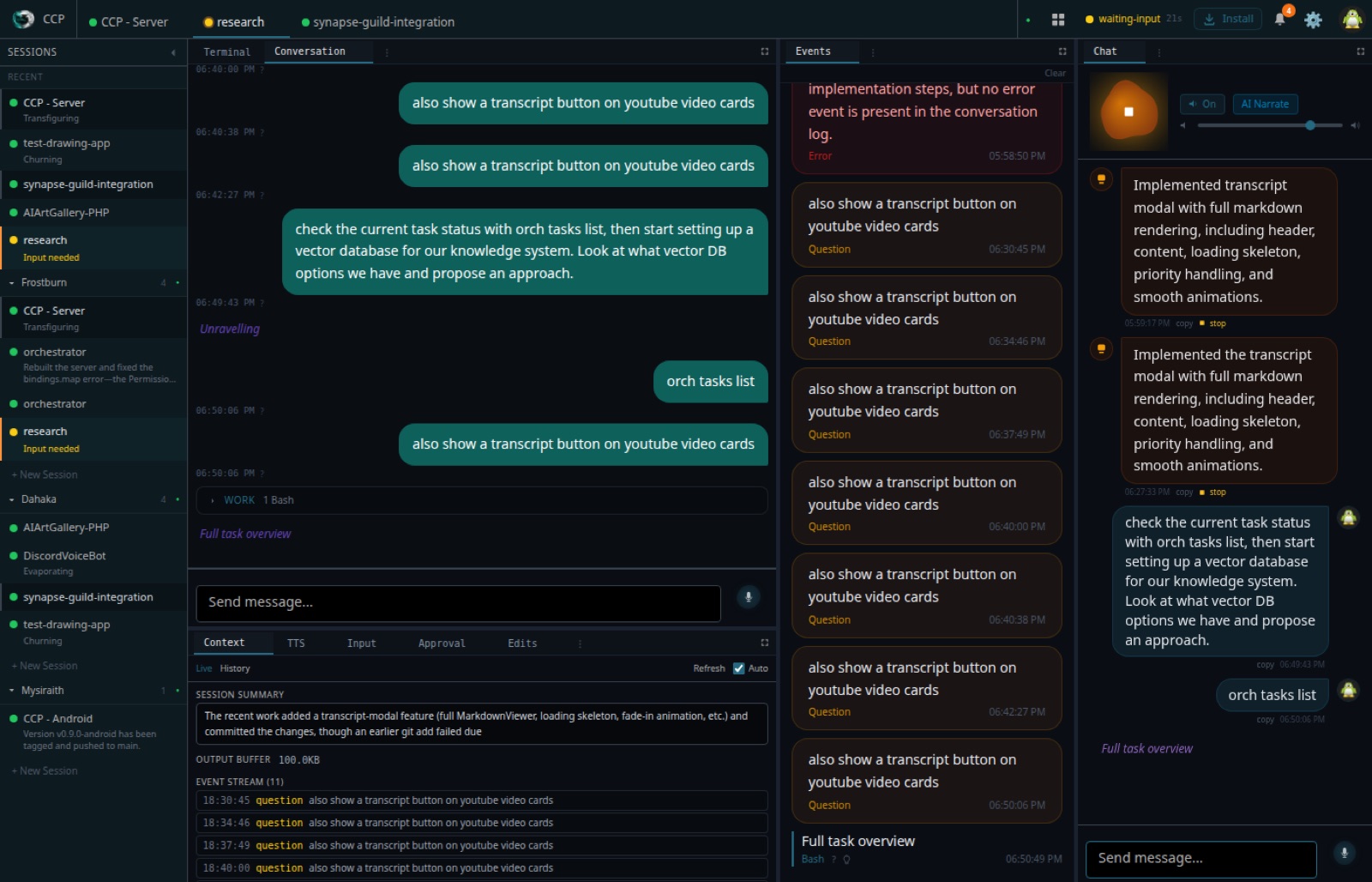
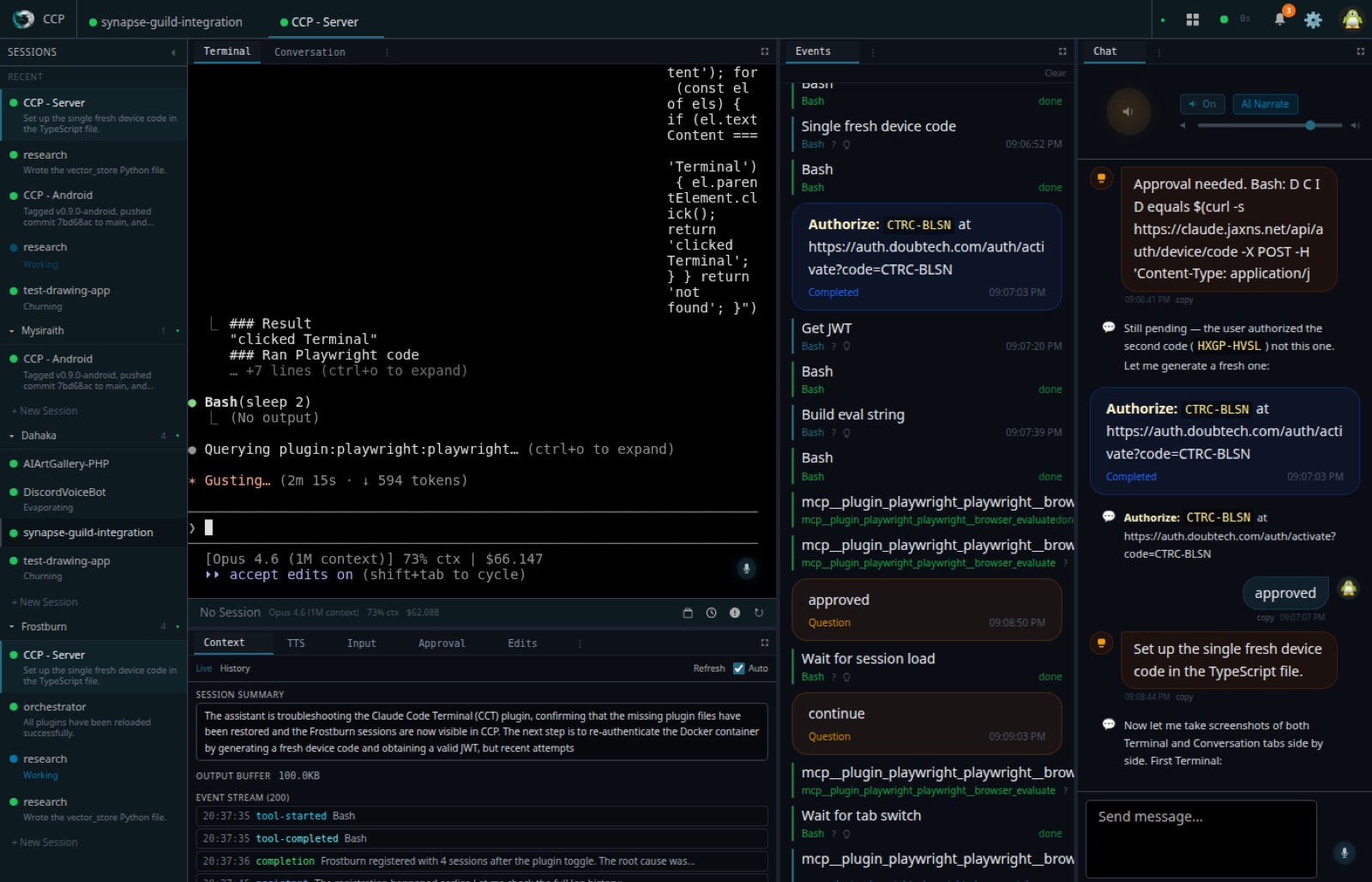
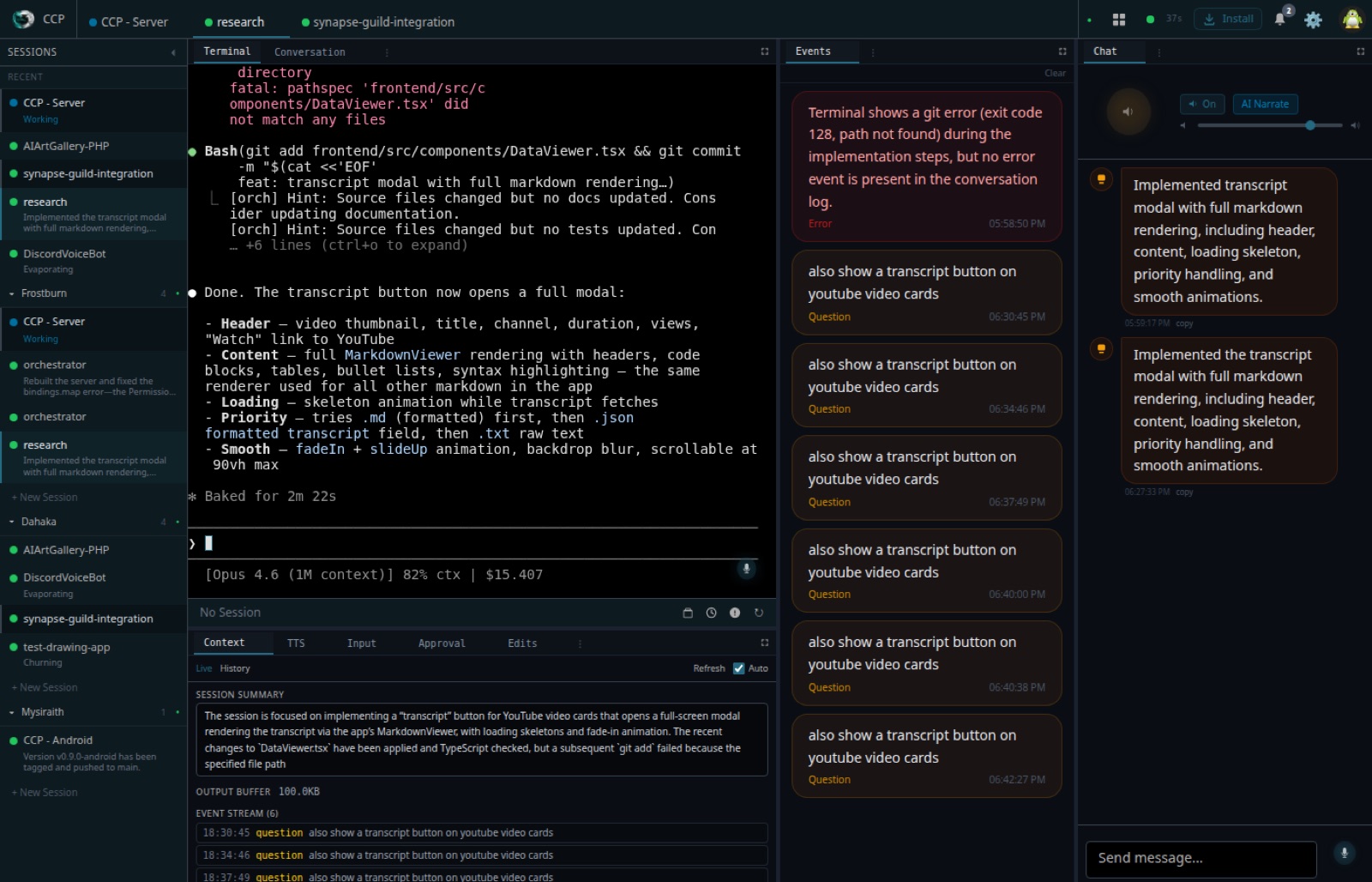
What. A web interface that puts my Claude Code sessions on any device. A sidebar lists sessions grouped by host — working, idle, channeling, or waiting on input — and I can browse, resume, or start new ones across machines from one place. Each session gives me a live xterm.js terminal with synchronized PTY dimensions, a structured Conversation panel that surfaces questions, approvals, and tool calls with AI summaries and per-message model/cost/context metadata, an Events feed, and push-to-talk voice input with spoken (AI-narrated) responses. Approvals are answerable inline from the chat — yes/no, approve — without touching the terminal. A multi-session grid view tiles up to a dozen agents at once so I can see at a glance which ones are working and which are blocked on a question.
Why. Claude Code runs on the machine with the code, but I am not always at that machine. CCP makes a long-running session reachable from a phone or a laptop on the couch without SSH, and makes it answerable by voice instead of a keyboard.
How. Claude Code Terminal instances connect out to a Fastify + WebSocket proxy server via a ccp-proxy-client plugin; the browser SPA talks to the same server over WebSocket and REST. A dual-brain LLM setup splits quick summarization from deep analysis, and ElevenLabs handles speech-to-text and text-to-speech. Auth auto-detects between DoubTech SSO, local password accounts, or none, with four user tiers and per-user host and project path restrictions. Ships as a Docker image, a self-contained standalone build for Windows/macOS/Linux with Node bundled, or from source.
Stack: TypeScript, Fastify, WebSocket, React + Vite, xterm.js, ElevenLabs, Docker, pnpm workspaces.
Built Mar–Jul 2026 across ~1,440 commits. Private repo.
Image Gallery